

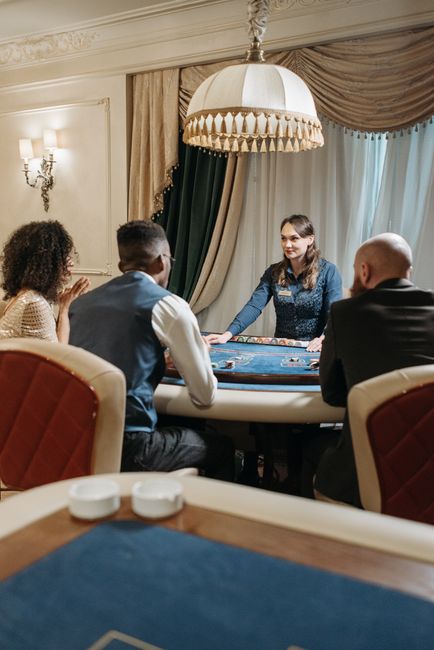
You know the feeling. The reels are spinning, your heart is thudding against your ribs, and for a split second, every pixel on the screen seems to hold the promise of a life-changing payout. Then the last reel lands on a lemon, the noise stops, and you're left staring at a balance that's a little lighter than it was thirty seconds ago. We've all been there. Whether you're a seasoned poker grinder or someone who just likes a cheeky accumulator on a Saturday afternoon, the iGaming world is a masterclass in human psychology. It's not just luck or math; it's a carefully designed ecosystem built to keep you engaged, entertained, and occasionally, extremely lucky.
But here's the thing: understanding why these games feel so compelling doesn't ruin the fun. It actually makes you a sharper player. Let's pull back the curtain on the mechanics, the math, and the weird quirks of the human brain that make the casino floor—both physical and digital—such a fascinating place to be.
Let's start with the undisputed king of the casino floor: the slot machine. In 2023, slots generated roughly 70% of all casino gaming revenue in the United States. That's not an accident. Modern slots are technological marvels, but at their core, they are governed by a piece of software called a Random Number Generator (RNG).
The RNG is constantly generating thousands of numbers per second, even when you're not playing. The moment you hit that spin button, it grabs a number, and that number maps to a specific outcome on the reels. This is why the "hot" or "cold" machine myth is just that—a myth. The machine has no memory. It doesn't know you've lost five times in a row. Each spin is an independent event.
Where it gets interesting is in the Return to Player (RTP) percentage. Most online slots sit between 94% and 97%. This means that over millions of spins, the machine is programmed to pay back that percentage to players. The house edge is the remaining 3% to 6%. But here's the catch: that RTP is calculated over an infinite timeline. In a single session, variance is a beast. You could hit a 5,000x multiplier on your first spin or lose 200 spins in a row. Understanding variance is the difference between a fun session and a frustrating one.
If you're looking to maximize your playtime, look for slots with high RTP (96%+) and low volatility. If you're chasing that million-dollar dream, high-volatility slots like Book of Dead or Money Train are your poison—they pay rarely but can pay huge.
If slots are a game of pure chance, poker is the exact opposite. It's a game of incomplete information, psychology, and math. And that's why it's so addictive to a certain type of person. In Texas Hold'em, you're not just playing your cards; you're playing your opponent's range. สล็อต offers a practical breakdown of the topic.
The magic of poker is that you can win with the worst hand. If you can convince your opponent that you have the nuts (the best possible hand), they'll fold. This is the art of the bluff. But bluffing too much is a fast track to broke. The best players in the world use a concept called GTO (Game Theory Optimal) play. It's a mathematically unexploitable strategy that balances value bets and bluffs so your opponent can never know what you have.
For the recreational player, though, poker is about patience and observation. Here are a few concrete tips that will instantly improve your win rate at low-stakes tables:
Poker is a grind. Even the best players go on downswings lasting weeks. The key is bankroll management. Never sit down at a table with more than 5% of your total poker bankroll. If you have $1,000 dedicated to poker, play $50 buy-in games. This protects you from the inevitable variance.
Sports betting has exploded in the US since the repeal of PASPA in 2018. Now, you can bet on everything from the Super Bowl to the number of corners in a League Two soccer match. But here's the uncomfortable truth: sports betting is one of the toughest markets to beat. The bookmakers employ teams of data analysts and traders who set lines with a margin (the vig) that ensures they profit regardless of the outcome.
So why do so many people think they can beat the bookie? Because of the illusion of control. We watch sports, we read the news, we think we know that the star striker is injured. But the bookmaker knows that too, and the odds are already adjusted. The only way to consistently win is to find value—when the odds offered are higher than the true probability of the outcome. This is incredibly hard to do consistently.
If you enjoy sports betting, treat it as entertainment, not an investment. Set a strict budget for the month. And please, avoid parlays. They are the lottery tickets of the sports betting world—they offer huge payouts but the house edge compounds with every leg you add.
One of the biggest shifts in iGaming over the last five years is the rise of live dealer games. Instead of a digital RNG, you're playing with a real human dealer via a video stream. You can chat with them, they spin the wheel, and you place your bets in real-time. It bridges the gap between the online and physical casino experience.
But there's a darker side to the social aspect: social casinos. These are games that look like slots or poker but use virtual coins instead of real money. You can't cash out, but you can buy more coins. These games are designed to be endlessly engaging, often using the same psychological triggers as gambling—flashing lights, near misses, and variable rewards—without the regulatory oversight. For some, they are a harmless diversion. For others, they are a gateway to real-money gambling.
If you're playing online, always check for a license from a reputable authority like the Malta Gaming Authority (MGA) or the UK Gambling Commission. These regulators enforce strict rules on fair play, payout speeds, and responsible gambling tools.
At the end of the day, the iGaming world is a business. It's designed to make money from your entertainment. That's not a conspiracy; that's commerce. The slots, the poker rooms, the sportsbooks—they are products. And like any product, they are engineered to be appealing.
None of this means you can't enjoy them. You absolutely can. The key is self-awareness. Are you playing for the thrill of the spin, the mental challenge of a poker hand, or the sweat of a last-minute accumulator? If you're playing for fun and you're within your budget, you're doing it right. If you're playing to chase losses or to solve a financial problem, the math will always win.
So the next time you log in, take a second to appreciate the psychology at play. Enjoy the ride, set your limits, and remember that the house always has an edge—but the smart player knows how to manage it.

Creatingparlour We spend our time finding what works so you don't have to, and sharing exactly what made the difference.

Creatingparlour No rushing, no fuss — just thoughtful notes and practical help, written by people who care.

Compare basic stitches, motor speeds and presser feet before buying your first sewing machine, so you can sew simple projects with confidence.

Comments
ALina Kelian
19th May 2018 ReplyCreatingparlour Written for people who value the details, and want honest guidance they can trust. ullamco laboris nisi ut aliquip ex ea commodo consequat.
Rlex Kelian
19th May 2018 ReplyCreatingparlour Written for people who value the details, and want honest guidance they can trust. ullamco laboris nisi ut aliquip commodo.
Roboto Alex
21th May 2018 ReplyCreatingparlour We spend our time finding what works so you don't have to, and sharing exactly what made the difference. ullamco laboris nisi ut aliquip ex ea commodo consequat.