

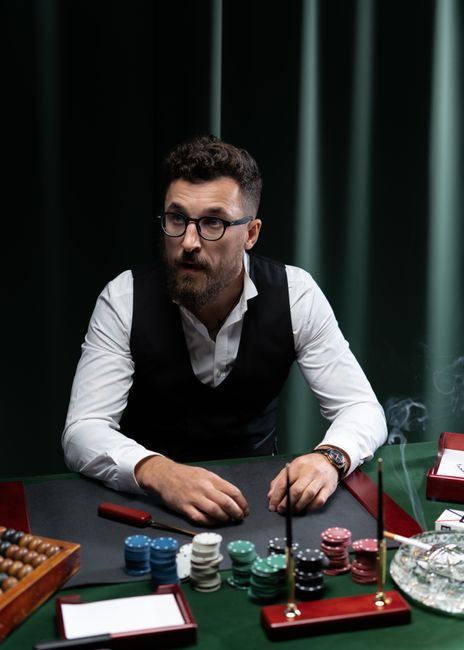
You know the feeling. You're three hours deep into a slot session, the RTP is grinding you down at 96%, and somewhere in the back of your mind a small voice whispers: the house edge on blackjack is 0.5%. Why am I here? Yet you keep spinning. That voice is the exact reason most iGaming players never migrate from slots to poker — and it's costing them thousands in expected value over a lifetime of play. Poker is the only game in the casino where a skilled player can realistically hold a long-term edge over the house. So why do so few people cross that bridge?
Let's talk honestly about what stops people, and what actually works when you decide to make the switch. If this is new to you, สล็อต is a sensible next read.
Slots are engineered for a specific emotional rhythm: near-misses, escalating bonus features, and frequent small wins that keep dopamine flowing. There's nothing wrong with that. But the mathematics are brutal in the long run. An average video slot with a 96% RTP means the house keeps roughly £4 for every £100 you wager. At 500 spins per hour on a £1 stake, you're theoretically losing £20/hour — and variance hides it well enough that you don't feel the leak in real time.
Compare that to no-limit hold'em at a 5% rake capped at £3. A competent player at a soft live or micro-stakes online table can sustain a win rate of 5–10 big blinds per 100 hands. At £1/£2, that's £10–£20 per 100 hands in pure profit, before variance. Over 1,000 hours a year, the difference between those two paths isn't a rounding error — it's a car.
The catch? Poker demands work. Slots demand nothing. That asymmetry is the entire barrier.
Most iGaming players who've never touched poker have the same mental image: sunglasses, hoodies, silent assassins in a dimly lit card room. Online poker, especially at the micros, is nothing like that. At £0.01/£0.02 tables, you're playing against students, casuals, drunk weekend warriors, and bots whose only edge is volume. The standard is low. Genuinely, painfully low.
Here's what actually scares people:
All four objections are legitimate. None are permanent. The trick is not to try becoming Phil Ivey in a weekend. Learn one concept at a time, play for stakes you genuinely don't care about, and treat every session as training data rather than a paycheck.
You don't need a coach, a solver subscription, or a Discord community to get started. You need six weeks and a commitment to boredom. Here's the sequence that works for most recreational players making the jump:
By the end of week six, you'll either know poker isn't for you or you'll be hooked on a version of casino gaming that actually rewards skill. Either outcome beats another 500 hours of spinning.
Here's a contrarian take most poker purists won't tell you: there's nothing wrong with keeping a slots habit while learning poker. The two games scratch entirely different itches. Slots are entertainment, properly budgeted, essentially a subscription fee for the thrill of a slot session. Poker is a discipline. Treating them as separate line items in your monthly budget — say £100 to slots, £100 to poker, and never mixing the two — keeps both honest.
The mistake is treating slots as a bankroll builder for poker. It doesn't work. It has never worked. The RTP guarantees that if you funnel slot winnings into poker buy-ins, you're just paying the house two rakes instead of one.
One real advantage of being a multi-game iGaming player: casino welcome bonuses, reload promos and free spins offers often come with wagering requirements that apply across sports betting, slots and sometimes poker. Read the terms carefully — some operators exclude poker from wagering, others count it at 10% of the normal rate. Getting this wrong can trap your bonus in perpetuity. Always check the contribution table before opting in.
Whatever game you play, the rule is the same: never put money on the table you can't lose without changing your week. The difference with poker is that a sustainable bankroll needs to be 20–30 buy-ins at your stake, because variance will punish you across hundreds of hands, not hours. If you can't fund that at £1/£2, play £0.25/£0.50. Pride is expensive.
Most people who read articles like this never actually sit down at a poker table. They read, nod, and go spin again because that's the path of least resistance. That's fine — honestly, it's fine. Slots are entertainment and there's no shame in enjoying them. But if you've ever felt that quiet frustration after a losing session, the one that whispers this is designed against me, understand that poker is the one door in the house that opens both ways. It rewards patience, punishes ego, and gives you a genuine shot at profitability that no slot machine will ever offer. Six weeks of boring study is a small price for access to that edge. The chips are already on the table. You just have to decide which game you're playing.

Creatingparlour We spend our time finding what works so you don't have to, and sharing exactly what made the difference.

Creatingparlour No rushing, no fuss — just thoughtful notes and practical help, written by people who care.

Compare basic stitches, motor speeds and presser feet before buying your first sewing machine, so you can sew simple projects with confidence.

Comments
ALina Kelian
19th May 2018 ReplyCreatingparlour Written for people who value the details, and want honest guidance they can trust. ullamco laboris nisi ut aliquip ex ea commodo consequat.
Rlex Kelian
19th May 2018 ReplyCreatingparlour Written for people who value the details, and want honest guidance they can trust. ullamco laboris nisi ut aliquip commodo.
Roboto Alex
21th May 2018 ReplyCreatingparlour We spend our time finding what works so you don't have to, and sharing exactly what made the difference. ullamco laboris nisi ut aliquip ex ea commodo consequat.